Most dental clinics do not lose patients because the treatment is poor. They lose them before the first appointment.
A patient searches, checks your reviews, opens your website, compares your treatment page, looks for price guidance, then decides whether to call. If any part feels unclear, slow or untrustworthy, they move to another clinic.
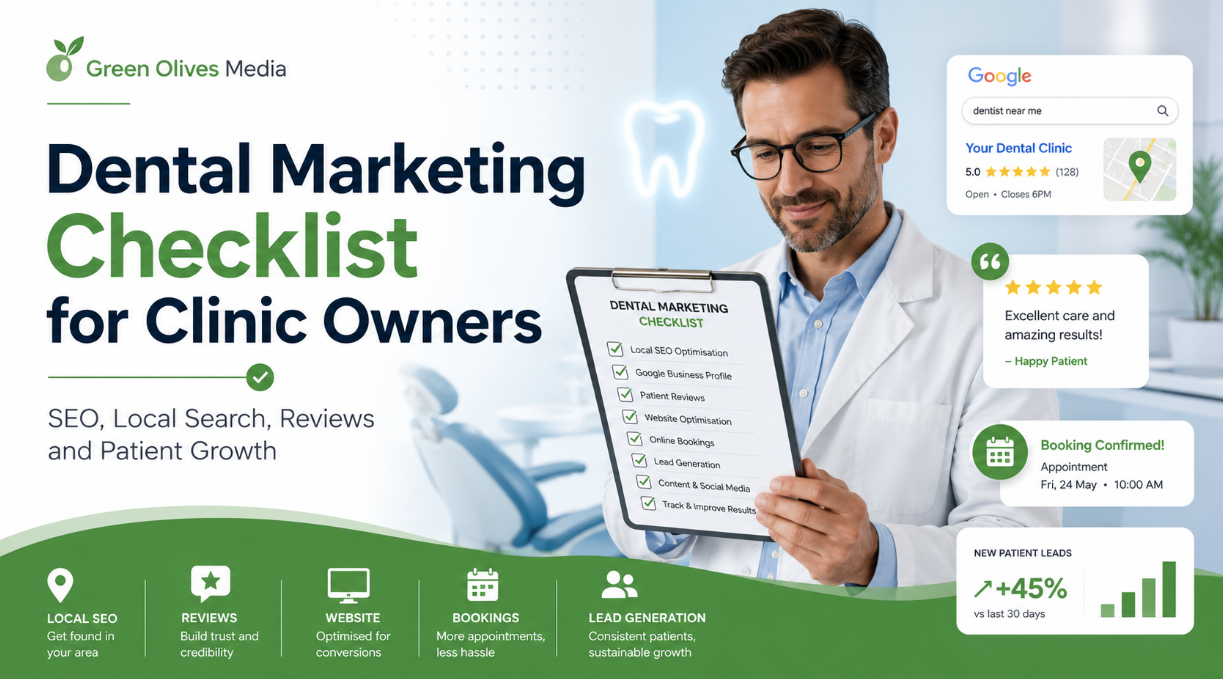
This dental marketing checklist for clinic owners helps you fix the full patient journey, not just “get more traffic”.
What should a dental clinic check before spending more on marketing?
Before you increase ad spend or publish more content, check the basics first.
Your clinic needs:
- A clear website
- Strong local SEO
- Treatment pages for key services
- Real reviews
- Fast booking options
- Proper call and form tracking
- Follow-up for missed enquiries
- Ethical, accurate advertising
Start with your website. If patients cannot quickly understand who you help, where you are based and how to book, your marketing will leak leads.
A good starting point is to review your main dental landing page, such as digital marketing for dentists, then connect it with your wider digital marketing and SEO strategy.
How can local SEO help a dental clinic get more nearby patients?
Dental searches are local by nature. Patients usually want a dentist near home, work or school.
Your local SEO checklist should include:
- Google Business Profile completed fully
- Correct clinic name, address and phone number
- Accurate opening hours
- Appointment link added
- Photos of the clinic, team and reception
- Services listed properly
- Reviews answered politely
- Location mentioned naturally on key pages
- Local schema added where possible
Do not write for Google only. Write for nervous patients who want quick answers.
For example, instead of saying “best dentist in London” again and again, explain:
- Which areas you serve
- How parking works
- Whether you offer emergency appointments
- Whether you accept NHS, private or mixed patients
- How quickly someone can request a booking
The GDC says dental advertising should make it clear whether a practice is NHS, mixed or private, so your website and ads should not leave patients guessing. Add this information on your homepage, contact page and treatment pages.
What should every dental treatment page include?
One short services page is not enough if you want to rank and convert.
Each main treatment should have its own page, such as:
- Dental implants
- Invisalign or clear aligners
- Composite bonding
- Teeth whitening
- Emergency dentistry
- Hygiene appointments
- Root canal treatment
- Dentures
- Children’s dentistry
- Private check-ups
A strong treatment page should answer:
- Who is this treatment for?
- What problem does it solve?
- What happens during the appointment?
- How long does it take?
- Is it painful?
- What does aftercare look like?
- What price range or payment guidance can you share?
- Why should the patient choose your clinic?
- How can they book?
This helps SEO because the page has depth. It helps AI search because answers are clear. It helps patients because they do not need to call just to understand the basics.
If your website structure is weak, review your web development and our services pages to make sure your marketing pages support patient action.
How can your dental website convert more visitors into enquiries?
Traffic is useful only when patients take action.
Check these points on every important page:
- Phone number visible at the top
- Click-to-call enabled on mobile
- Appointment button above the fold
- Short form with limited fields
- Location and opening hours easy to find
- Emergency instructions clear
- Reviews shown near booking areas
- Dentist profiles linked from treatment pages
- Page loads quickly on mobile
Avoid long forms. A patient with tooth pain does not want to fill in ten fields.
Ask for:
- Name
- Phone number
- Treatment interest
- Preferred appointment time
That is enough to start the conversation.
You can also use a dedicated marketing consultation page if you want to review where patients drop off before booking.
How should dental clinics use reviews without sounding pushy?
Reviews are one of the strongest trust signals for a dental clinic.
Ask at the right moment, such as after:
- A successful treatment
- A positive hygiene visit
- A nervous patient had a good experience
- An Invisalign milestone
- A family appointment
- A completed implant or cosmetic case
Keep the request polite:
“Thank you for visiting us today. If you felt looked after, we would really appreciate a Google review. It helps other local patients choose care with more confidence.”
Do not offer discounts or rewards for reviews. Do not pressure patients. Real reviews are better for trust and safer for your brand.
Add selected reviews to your website, especially on treatment pages and your testimonial page.
What content should a dental clinic publish for SEO and AI Overview?
Good dental content should answer real patient questions.
Useful blog topics include:
- How much does composite bonding cost?
- What should I do if I have toothache?
- Is teeth whitening safe?
- How long do dental implants last?
- Invisalign vs braces
- Why are my gums bleeding?
- Can I see a private dentist without being registered?
- What happens at a hygienist appointment?
For each blog post, use:
- A direct answer near the top
- Short paragraphs
- Question-based headings
- Bullet points
- Internal links to treatment pages
- External links to trusted sources where helpful
- FAQs at the end
- A soft call to action
For pricing content, link to official sources when relevant, such as NHS dental treatment costs. This helps users and supports trust.
How can dental ads bring better quality leads?
Google Ads can work well for dental clinics, but only when the page matches the search.
Do not send every ad to the homepage.
Use specific landing pages for:
- Emergency dentist
- Dental implants
- Invisalign
- Composite bonding
- Teeth whitening
- New patient check-ups
Before launching ads, check:
- The headline matches the search intent
- The clinic location is clear
- The offer is realistic
- The phone number is visible
- The form is short
- Calls and forms are tracked
- Negative keywords are added
- The page explains the treatment properly
Avoid exaggerated claims. Before and after photos must not mislead patients. The ASA has guidance on before and after images, so use real cases carefully and only with proper consent.
For wider campaigns, connect your ads with lead generation, social media marketing and graphic designing so the message stays consistent.
What should clinic owners track every month?
You do not need a complicated dashboard at the start. You need useful numbers.
Track:
- Website visits
- Google Business Profile calls
- Form submissions
- Phone calls
- Missed calls
- Booked appointments
- Treatment type requested
- Cost per lead
- Cost per booked patient
- Pages that bring enquiries
- Pages that get traffic but no leads
This shows what is working and what needs fixing.
For example:
- High traffic but low enquiries means the page may not convert
- Many calls but few bookings may mean reception follow-up needs work
- High ad spend but weak leads may mean keyword targeting is wrong
- Good rankings but no calls may mean the offer or location is unclear
How can Green Olives Media help dental clinics grow?
Green Olives Media helps dental clinics build marketing that brings the right patients, not just random clicks.
The focus is on the full journey:
- Local SEO so nearby patients can find you
- Treatment pages that answer real questions
- Website design that makes booking easier
- Paid ads that match patient intent
- Lead tracking so you know what works
- Content that supports Google, AI search and patient trust
If your clinic has traffic but not enough bookings, or your ads are spending money without clear results, Green Olives Media can review your website, SEO, landing pages and lead journey.
You can learn more about the team on the about page, view pricing or speak directly through the contact page.
What is the monthly dental marketing checklist?
Use this checklist every month:
- Update Google Business Profile
- Add new clinic photos
- Reply to reviews
- Improve one treatment page
- Publish one patient-focused article
- Check website forms
- Test click-to-call buttons
- Review missed calls
- Check local rankings
- Review ad spend and leads
- Refresh old content
- Add internal links between related pages
Small monthly improvements are easier to manage than one big website rebuild every few years.
Ready to get more dental patient enquiries?
Your clinic does not need louder marketing. It needs clearer marketing.
Patients should be able to find you, trust you and book without confusion.
If you want a practical review of your dental website, SEO, ads and lead journey, book a consultation with Green Olives Media today.
Start here: Dental Marketing for Dentists or request a marketing consultation.
FAQs
What is the best dental marketing strategy for clinic owners?
The best dental marketing strategy combines local SEO, treatment pages, patient reviews, conversion-focused website design, call tracking and follow-up. Paid ads can help, but only when the website is ready to convert visitors into enquiries.
How can a dental clinic rank higher on Google?
A dental clinic can improve rankings by updating its Google Business Profile, creating detailed treatment pages, earning genuine reviews, adding local content and keeping contact details consistent across the web.
Should a dental clinic run Google Ads?
Yes, if tracking and landing pages are set up properly. Google Ads work best for high-intent services such as emergency dentistry, implants, Invisalign and cosmetic treatments.
How often should a dental clinic publish content?
One useful blog every one or two weeks is a good starting point. Focus on patient questions, treatment guidance and local search intent rather than thin generic posts.
What makes a dental website convert better?
A dental website converts better when it has clear calls to action, fast mobile loading, real reviews, treatment-specific pages, visible contact details and a simple booking process.